
From the enactment of the capital control Act to the recognition of the BSE as a stock exchange and the infamous Harshad Mehta scam, here are the 18 biggest events for stock markets from 1947 to 1993.

In eight cases, the banks would violate the minimum public shareholding norms if their promoter, the Government of India, infused capital as announced.

'The Reserve Bank's independence has remained a work in progress, an enduring challenge that the nation has been grappling with on an ongoing basis,' says RBI Deputy Governor Dr Viral Acharya.
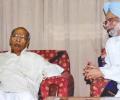
'Narasimha Rao asked me why China was doing so well in attracting foreign investments and I gave my frank opinion.' 'I told him that giving thrust to exports had to be a national effort.' 'But in India, the system was very centralised in the Government of India and the state governments had no role to play.'

The implementation of their recommendations means that an adequate apparatus to change this is at the disposal of the government.

'If the RBI had done the right things, these mistakes would not have happened in banks, public or private,' says Ajay Shah.

'The hour is very late, and the choice between triumph and tragedy knocks at our door,' says Ajay Shah.

The finance minister may stagger some of the recommendations.

Government looking at cushioning slowdown due to demonetisation with sops and higher outlay for micro, small and medium enterprises, agriculture, and affordable housing.
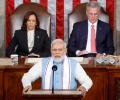
Here's the full text of Prime Minister Narendra Modi's address to a joint session of the United States Congress, delivered on Thursday.

The government has recapitalised public sector banks (PSBs) by infusing over Rs 3.10 lakh crore in the last five fiscals, a majority of which was through issuance of recapitalisation bonds, Parliament was informed on Monday. "Government has infused Rs 3,10,997 crore to recapitalise banks during the last five financial years i.e., from 2016-17 to 2020-21, out of which Rs 34,997 crore were sourced through budgetary allocation and Rs 2,76,000 crore through issuance of recapitalisation bonds to these banks," Minister of State for Finance Bhagwat Karad said in a written reply in the Lok Sabha. He was responding to a host of questions asked by Congress party's Member of Parliament Manish Tewari.

The speed at which he led the central bank in different areas -- ranging from internal reorganisation to inflation fighting, stabilising the currency, taking on rogue corporations, cleaning up bank balance sheets, and opening the sector -- makes one believe that Rajan knew he had only three years to do his job. A fascinating excerpt from Tamal Bandyopadhyay's MUST-READ Roller Coaster: An Affair with Banking.

'This is a historical moment in the political history of Sri Lanka.' 'You can see the amount of pressure that is coming from the people because nobody addressed the policy blunders, multiple corruption charges and huge scandals.'

The system envisaged under the FRDI Bill, if implemented properly, would help improve the efficiency of capital allocation without harming consumers, and without risking the stability of financial firms, says Ajay Shah.

The Budget is remarkably coherent.
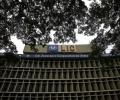
The IPO-bound national insurer LIC is not only the largest holder of government debt -- owning 19 per cent of the G-secs -- but also the single largest owner of equities, the largest fund manger as well as holder of household savings, dwarfing even SBI deposits, as per a report. Holding 17 per cent of the over Rs 80.7 lakh crore dated government securities, maturing by 2061, the Reserve Bank is the second largest holder of government debt, while led by public sector banks, commercial banks collectively own around 40 percent. Other insurers cumulatively own only 5 per cent.

The department of investment and public asset management (Dipam) can also seek in-principle approval from the Cabinet Committee on Economic Affairs (CCEA) for strategic divestment of PSUs on a case-to-case basis considering investor appetite and sectoral trends.

The National Democratic Alliance won 64 seats.

'A buoyant market economy is one which is led by the innovation and imagination of private persons,' notes Ajay Shah.

Moitra brought two birthday caps in the House to press her argument that the businessman being most talked about had "topi-pehnau-ed" the government.

New norms are in place to strengthen regulations for this set of lenders which has been playing a critical role in Asia's third largest economy, notes Tamal Bandyopadhyay.

'Given the possibility that our unstable northern and western borders may become 'live' at short notice, any major systemic change which impacts combat effectiveness should be brought about in a cautious and progressive manner.'

The report said Zuma 'would do anything that the Guptas wanted him to do for them,' including firing competent ministers and senior officials at parastatal institutions, so that Gupta lackeys could be appointed to those positions.

The Modi government has handled inflation far better than any government in the past two decades. Both the stock market and currency indices have begun to show confidence in the economy, despite the mounting global headwinds of trade.
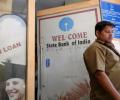
Bankers said the mammoth task of cleaning up the PSBs and improving their health will be a mammoth task for any chief executive.

The primary market is set for a bumper Rs 80,000-crore bonanza with 30 companies already filing IPO papers to raise Rs 55,000 crore, while around 10 more are lined up for this month itself, seeking to mop up another Rs 25,000 crore, say investment bankers. The market has been on a non-stop rally, hitting new records almost every week, on the back of an influx of investors -- a vast majority of them first-timers -- coupled with a flood of liquidity. Foreign funds alone had pumped in a record $35 billion into the market in FY21, while the trend has continued this fiscal as well. Domestic institutions led by LIC have also infused trillions of rupees, helping woo retail investors in troves -- the year saw over 20 million new investors coming to the market.

The National Stock Exchange (NSE) has got into firefighting mode to control the reputational damage caused by the Securities and Exchange Board of India's (Sebi's) order against its former managing director and chief executive officer Chitra Ramkrishna and others. According to sources, the exchange's management over the past one week has met several key stakeholders, including officials in the finance ministry and Sebi, major shareholders, and trading members, trying to distance itself from the controversy. The exchange plans to hold more meetings in the coming week to ensure that trading volumes and confidence in the bourse don't get impacted, they added.

In its essence, GST is a national level system of value added taxation of goods and services, says Shankar Acharya.
Some experts says that the high net-worth requirement of Rs 50 crore for setting up an IU is a deterrent.

Zomato's mega initial public offering (IPO) ended with a bumper 38 times oversubscription on Friday as institutional investors poured money to get a pie of the hottest online food delivery platform. Zomato got bids for 2,751.25 crore shares against 71.92 crore shares on offer, stock exchange data showed. The IPO is India's biggest since March 2020. Institutional investors, who shied away in the first two days of the IPO, bid several times over the number of shares reserved for them.

'The deaths of the children in the Gambia would batter India's reputation as the developing world's pharmacy.'

Last week, a Rajya Sabha committee had allocated five hours for discussion on GST.

Tamil Nadu's latest budget offers path-breaking initiatives and major boost for social infrastructure, which other state governments are sure to follow in the coming years, predicts N Sathiya Moorthy.

All banks are eligible for privatisation. A committee of secretaries will decide which banks will be privatised, says Financial Services Secretary Debasish Panda.

'Welfare schemes are not a necessary evil, they are a necessary good.'

There is money to buy the central public sector enterprises, but buyers will need a firm assurance that the disvestment programme will keep environment issues front and centre of their corporate plans.

The SME segment has been grappling with lack of liquidity and lacklustre institutional participation.
'If some measures are implemented quickly, they can help revive growth.'
According to the draft, in the northeastern states the threshold is at Rs 500,000.
.jpg)
Indian-American economist Arvind Panagariya has said that he is "honoured" to be appointed by Prime Minister Narendra Modi as the first Vice Chairman of the newly created NITI Aayog, which replaces the 65-year-old Planning Commission.
